
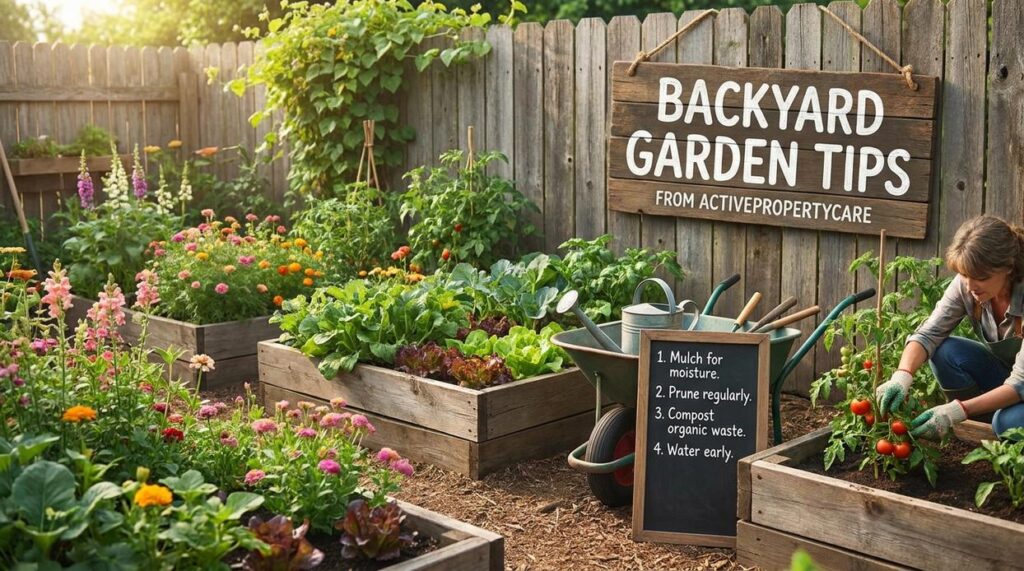
I know what it’s like to look at your backyard in July and wonder where it all went wrong.
You started the season with big plans. Now you’re staring at weeds taller than your tomatoes and wondering if it’s even worth saving.
Here’s the thing: garden maintenance isn’t complicated. It just needs a system.
I’ve spent years working on properties across different climates and soil types. The gardens that thrive aren’t the ones that get the most attention. They’re the ones that get the right attention at the right time.
This guide walks you through exactly what your garden needs and when it needs it. No overwhelming task lists. No expensive solutions.
These are AppCyard garden tips from ActivePropertyCare that I’ve tested on real properties with real problems. They work because they’re built around what actually kills gardens: inconsistency and guesswork.
You’ll learn how to handle weeding without spending your weekends on your knees. How to water in a way that actually strengthens your plants. How to spot pest problems before they take over.
Simple steps. Real results. That’s it.
The Foundation: Mastering Soil Health and Smart Watering
Your soil tells you everything.
I can walk through a Milwaukee garden in spring and know within minutes if someone’s been treating their soil right. The texture. The smell. How it crumbles in your hand.
Most people skip this part. They buy plants, stick them in the ground, and wonder why nothing thrives.
Here’s what I know after years of working with Wisconsin gardens. Your soil is either working for you or against you. There’s not much middle ground.
Why Soil Actually Matters
Healthy soil does the heavy lifting. Plants grown in good soil fight off pests on their own. They handle disease better. They need less water and less fussing from you.
It’s that simple.
Poor soil? You’re signing up for constant problems. Weak roots, stressed plants, and a garden that demands attention every single day.
Making Your Soil Better
Start with compost. Work it into your beds every spring (and again in fall if you’re feeling ambitious).
I’m talking real organic matter here:
- Finished compost from your bin or a local supplier
- Aged manure if you can get it
- Shredded leaves you saved from autumn
Mix it into the top six inches of soil. Your plants will thank you.
Then mulch. Two to three inches around your plants. This is one of those appcyard garden tips from activepropertycare that actually makes a difference. Mulch holds moisture in our hot July weeks. It keeps weeds down. And it regulates soil temperature when we get those weird cold snaps in May.
Water the Right Way
Deep and infrequent beats shallow and daily every time.
When you water deeply, roots grow down looking for moisture. Strong roots mean strong plants. Water every day with just a sprinkle? Your roots stay shallow and weak.
I water established gardens once or twice a week max. New plantings need more attention, but even then I’m thinking about root development.
Pro tip: Stick your finger three inches into the soil. If it’s dry down there, water. If it’s still moist, wait.
When to Water
Early morning wins. Always.
Water before 9 AM and you give plants time to drink before the sun gets serious. Less evaporation means you use less water. And here’s the thing nobody mentions enough: wet foliage at night invites fungal problems. Morning watering lets leaves dry out during the day.
I’ve seen too many appcyard gardens struggle with powdery mildew and leaf spot because people water at dinner time. Don’t be that person.
Get your soil right and your watering dialed in. Everything else gets easier from there.
Proactive Defense: Effective Weeding and Pest Management
Look, I’m going to be honest with you.
Most gardening advice tells you to fight weeds and pests like you’re going to war. Spray this. Pull that. Buy more products.
But here’s what nobody talks about.
The best gardens I’ve seen barely need intervention at all. Because the gardener set things up right from the start.
Some people say chemicals are the only real solution. They’ll tell you that natural methods are too slow or don’t work. And sure, pesticides kill bugs fast.
But what happens to your soil? What about the beneficial insects that actually help your garden thrive?
Prevention beats reaction every single time.
I learned this the hard way. My first herb garden got overrun with aphids because I didn’t know what I was doing. I pulled weeds every weekend until my back hurt.
Then I figured out a better way.
Start with a 2 to 3 inch layer of mulch around your plants. Not just any mulch though. Organic material like wood chips or straw works best because it breaks down and feeds your soil over time.
This one step blocks most weed seeds from getting the light they need to sprout.
When weeds do pop up, timing matters.
Pull them right after it rains. The soil is soft and the roots come out clean. Try doing this when the ground is dry and you’ll snap the stem while the root stays put (which means that weed is coming back).
Now let’s talk pests.
I use what’s called Integrated Pest Management. Fancy name for a simple idea. You create conditions where pests can’t thrive instead of just killing them after they show up.
Here’s what actually works.
Ladybugs eat aphids like it’s their job. Because it is. You can order them online or attract them by planting dill and fennel nearby.
Neem oil handles most common garden pests without harming your plants. Mix it with water and spray it on leaves where you see trouble. Just don’t do this in direct sunlight or you’ll burn your plants.
Companion planting is where things get interesting. Plant marigolds near your herbs and they’ll repel nematodes and other soil pests. Basil next to tomatoes keeps flies and mosquitoes away.
(This is the stuff you won’t find in most what do i need to start a herb garden appcyard guides because it takes real experience to know what combinations work.)
The secret most people miss? Early detection.
Walk through your garden every few days. Really look at your plants. Yellowing leaves mean something. Brown spots aren’t normal. Tiny bugs on the underside of leaves will become a massive problem if you wait.
Catch issues early and you can fix them with your hands. Wait too long and you’re dealing with an infestation.
Your garden wants to be healthy. You just need to set up the right conditions and pay attention.
Shaping Success: Essential Pruning and Deadheading Techniques
Most gardening guides tell you to prune your plants.
But they skip the part about why you’re doing it in the first place.
I see people hack away at their shrubs without understanding what they’re trying to accomplish. Then they wonder why their plants look worse or stop blooming.
Here’s what actually matters.
Pruning has three real goals. First, you’re removing dead or diseased branches before they spread problems to healthy parts. Second, you’re opening up the plant so air can move through (which stops fungal diseases before they start). Third, you’re shaping the plant so it looks better or produces more flowers and fruit.
That’s it. If you’re not doing one of those three things, put the pruners down.
Now let’s talk about deadheading.
Deadheading means removing flowers after they’ve finished blooming. When you do this, you’re basically tricking the plant. It wants to make seeds and call it a day. But when you remove spent flowers, the plant thinks it failed and tries again with more blooms.
It’s like hitting the reset button on flowering.
Most guides stop there. But here’s what they don’t tell you: not every plant needs deadheading the same way. Roses? Snip just below the spent bloom. Petunias? Pinch them back by a few inches to encourage bushier growth.
You need the right tools.
Get yourself clean, sharp bypass pruners for most stems. For anything thicker than your thumb, grab loppers. The key word here is clean. Dirty tools spread disease faster than you’d think.
Make clean cuts at a 45-degree angle just above a bud or branch junction. Ragged cuts invite problems (and honestly, they just look bad).
One more thing. I learned this from appcyard garden tips from activepropertycare: timing matters more than technique sometimes. Prune spring bloomers right after they flower. Summer bloomers get pruned in late winter or early spring.
Cut at the wrong time and you’ll remove all the buds that would’ve given you flowers.
Your plants will tell you what they need. You just have to know what you’re looking for.
Your Seasonal Garden Maintenance Calendar
I’ll be honest with you.
My first year maintaining a garden? I did almost everything wrong.
I waited too long to clean up spring debris. I overwatered in summer. I didn’t plant bulbs until it was too late in fall. And winter? I just hoped my plants would survive.
They didn’t all make it.
But here’s what I learned. Gardens don’t care about your good intentions. They need specific tasks done at specific times.
Some gardeners say you can just wing it and everything will work out fine. That nature takes care of itself. And sure, wild plants do their thing without our help.
But that’s not your garden.
If you want healthy plants and consistent blooms, you need a system. Not a complicated one, just a calendar that keeps you on track.
Spring: The Cleanup Season
This is where I messed up the most.
I’d see the first warm day and rush to plant new stuff. Meanwhile, last year’s dead stems and soggy leaves were still sitting there, creating the perfect home for pests and disease.
Start with debris removal. Get all that winter mess out of your beds before you do anything else.
Then amend your soil with compost. I used to skip this step (seemed like extra work) until I noticed my neighbor’s plants were twice as healthy as mine. Turns out soil quality actually matters.
Divide any perennials that have gotten too big. They’ll thank you with better growth.
Finish with a fresh layer of mulch. It keeps weeds down and moisture in.
Summer: The Consistency Game
Here’s where most people burn out.
You need to water regularly. Not when you remember. Not when plants look sad. Regularly.
I killed three hydrangeas before I figured this out.
Weeding can’t wait. Those little sprouts turn into monsters faster than you think. I learned this the hard way when my flower bed became a thistle farm.
Watch for pests too. Catching them early saves you from using the heavy stuff later.
Deadhead your flowering plants. Snip off the spent blooms and you’ll get more flowers. Skip it and the plant thinks it’s done for the season.
Fall: Setting Up Success
This season confused me for years.
I thought fall was when you just let everything die back and call it done.
Wrong.
Plant your spring bulbs now. Tulips, daffodils, crocuses. They need cold time in the ground to bloom next year. I missed this window my first three years and wondered why my spring garden looked so bare.
Cut back perennials after the first frost. Some people do this in spring, but fall cleanup makes the next season easier.
Collect those leaves for compost instead of bagging them. Free soil amendment for next year.
One last weeding session before winter saves you headaches in spring.
Winter: The Planning Phase
I used to think winter meant ignoring the garden completely.
But this is when you protect sensitive plants with burlap or mulch. I lost a expensive Japanese maple because I didn’t bother.
Clean and sharpen your tools now. Rusty, dull tools make every job harder. Trust me on this.
And here’s something I wish someone had told me earlier. Winter is perfect for planning next season’s layout. Sketch it out. Figure out what worked and what didn’t.
The appcyard garden tips from activepropertycare helped me finally get organized. Having a actual calendar instead of just remembering things changed everything.
Your garden doesn’t need perfection. It just needs consistency.
Enjoying the Fruits of Your Labor
You now have a season-by-season framework that takes the guesswork out of garden maintenance.
Garden care doesn’t need to stress you out or eat up your weekends. That’s not what gardening should feel like.
When you focus on the basics (great soil, smart watering, staying ahead of weeds, and pruning at the right time) your garden becomes easier to manage. It starts working with you instead of against you.
Pick one thing from this guide to tackle this week. Maybe it’s improving your soil or setting up a better watering schedule.
Small steps add up fast. You’ll see the difference in how your plants respond and how much less time you spend fighting problems.
Want more seasonal tips delivered right to your inbox? AppCyard garden tips from ActivePropertyCare gives you practical advice you can use right away. We focus on what actually works in real backyards, not theory from a textbook.
Your outdoor space has potential. Now you know how to bring it out.
 Calixra Voon, the founder of AppCyard, sets the overall direction of the platform through a forward-thinking approach to Tech Roundups and Gadget Innovations. Their work reflects a deep interest in how technology evolves and integrates into everyday life, often highlighting trends before they become widely recognized. Calixra’s writing combines curiosity with a clear sense of purpose, ensuring that each piece contributes meaningful insight rather than surface-level coverage. This perspective shapes AppCyard into a space that values both innovation and understanding.